
One of the things I appreciate most about being part of a university community is the opportunity to step outside of our immediate areas of expertise and listen to conversations taking place in other disciplines. I had that opportunity recently at the Eagleton Institute of Politics’ Constitution Day program, where constitutional scholar Akhil Reed Amar joined CNN Senior Legal Analyst Elie Honig for a conversation about the evolution of our constitutional principles and what they mean for American democracy today.
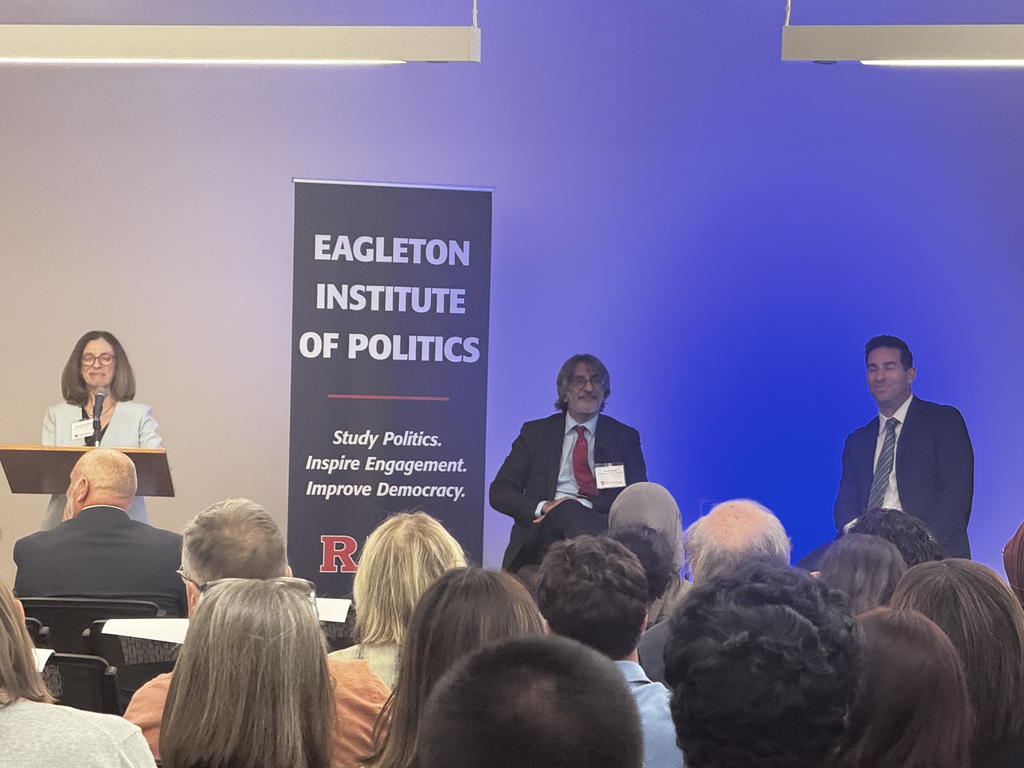
I was glad to see a strong student presence at the event. Engagement from students across campus is a meaningful reminder that these conversations are not simply academic exercises; they connect directly to the questions our students are asking as they prepare to contribute their own thinking to our field.
I left the conversation thinking about something that drives our profession and our work at Rutgers School of Social Work: the best outcomes arise when people can participate in the decisions that shape their lives and their communities. The Constitution provides a framework for our democracy, but it is people who give that democracy life through their participation, their voices, and their engagement with one another.
Social workers know the circumstances affecting a person’s well-being are rarely determined by individual choices alone. Policies, institutions, economic conditions, and community environments, to name a few, all play a role. The decisions made by our elected leaders and public institutions can influence whether people have access to housing, health care, education, economic opportunity, safety, and other resources that are essential to thriving.
This is why civic engagement matters so deeply to social work. Voting is one of the most fundamental ways people participate in our democracy. It is an opportunity to have a voice in selecting the people who will make decisions on behalf of our communities. But civic engagement is much broader than voting. It includes learning about the issues that affect our communities, participating in neighborhood and community organizations, engaging with public officials, advocating for policies, serving on boards and commissions, helping others understand their rights and responsibilities, and creating pathways for people to have a meaningful voice in decisions that affect them.
As social workers, we are primed to foster this kind of engagement. Our profession has a long history of helping individuals and communities find their voices and advocate for change. We work alongside people who may face barriers to participating fully in civic and community life, and we understand that strengthening communities means creating opportunities for everyone to be heard and to participate.
This work is also reflected in our faculty’s scholarship and teaching. Associate Professor of Professional Practice Marla Blunt has made political social work and civic engagement central to her work as an educator and scholar. She helps students understand the political process and the many ways social workers can participate in civic life from voting and community engagement to influencing policy and pursuing leadership roles. Her work reinforces an important point: political social work is not separate from our profession’s mission; it is one of the ways social workers can put our values into practice.
That responsibility extends into social work education. As faculty and staff, we can help our students understand the systems in which they will practice and the many ways they can impact those systems. We can encourage students to be informed about the issues affecting the people and communities they serve, to understand how policy decisions are made, and to recognize that social workers can be participants in democratic life, not simply observers.
Civic engagement does not require us to agree with one another. In fact, a healthy democracy depends on our ability to engage across difference, listen to varying perspectives, and work toward solutions to shared challenges. This is something social workers are uniquely positioned to handle. Our profession asks us to listen, build relationships, understand context, and bring people together around the goal of improving lives and communities.
The Constitution Day conversation was also a reminder that the principles we discuss in historical terms like equality, citizenship, and constitutional rights, continue to have very real consequences for people today. They are reflected in the questions our students bring into the classroom, the issues our researchers study, the challenges our practitioners encounter, and the communities with which we partner.
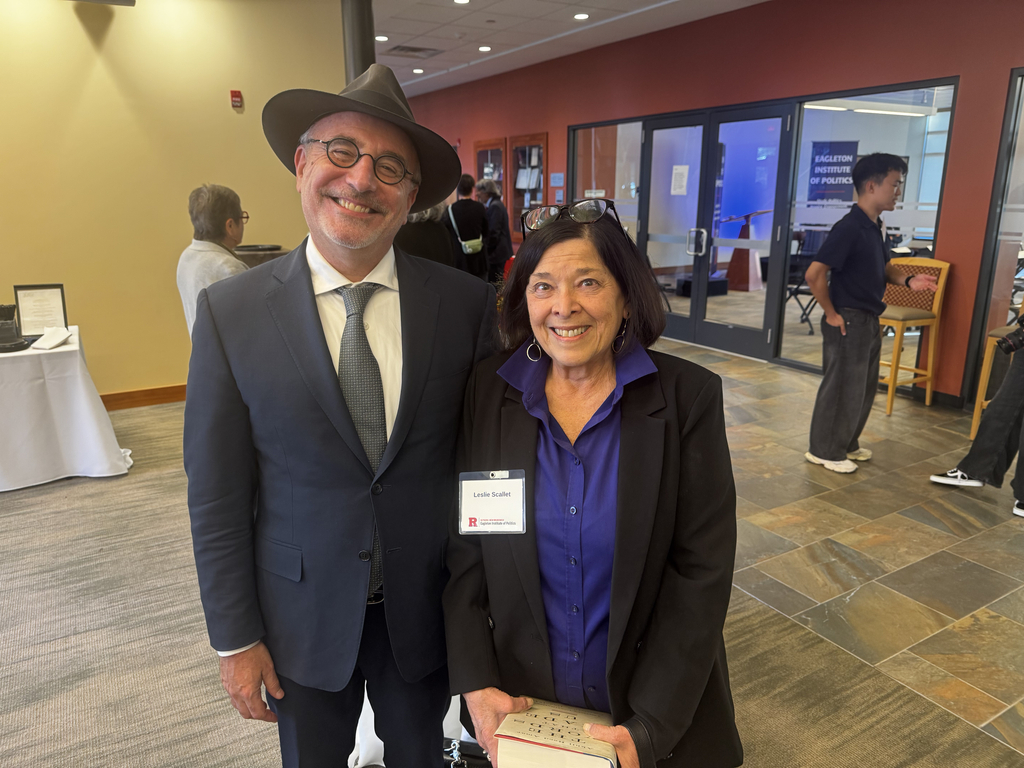
While attending the event, I had the opportunity to connect with Leslie Scallet, a wonderful friend and supporter of Rutgers and the School of Social Work, who is pictured with me below. Our School is fortunate to have a community of alumni, donors, partners, faculty, staff, and students who believe deeply in the importance of our work and help us extend our impact beyond our classrooms and offices.
As we begin another academic year, let us think about our roles not only as educators, administrators, researchers, practitioners, and university professionals, but also as members of the communities we serve. Our participation matters, our voices matter, and our willingness to help others participate matters.
For me, that was one of the most important takeaways from Constitution Day: democracy is not something that simply exists around us. It is something we all have a responsibility to sustain through our engagement with one another and with our communities. That responsibility is deeply aligned with social work and with the purpose that brings us together at Rutgers.